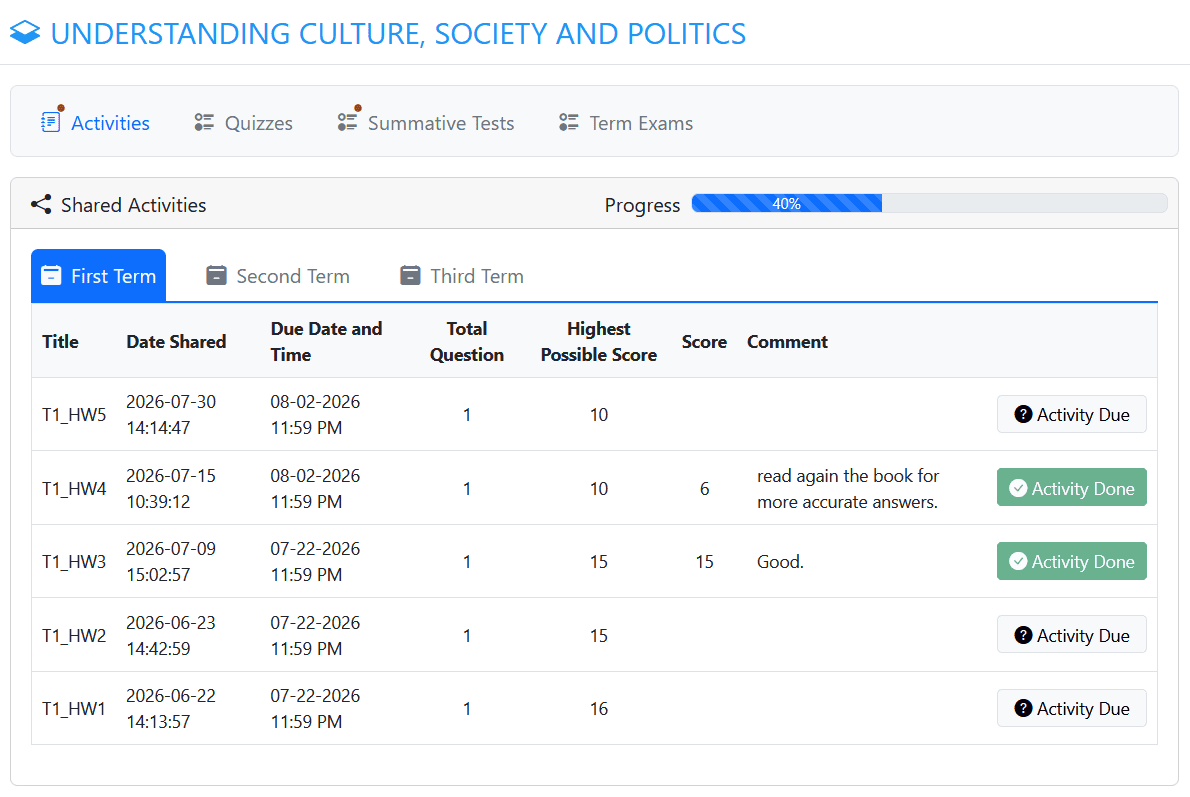
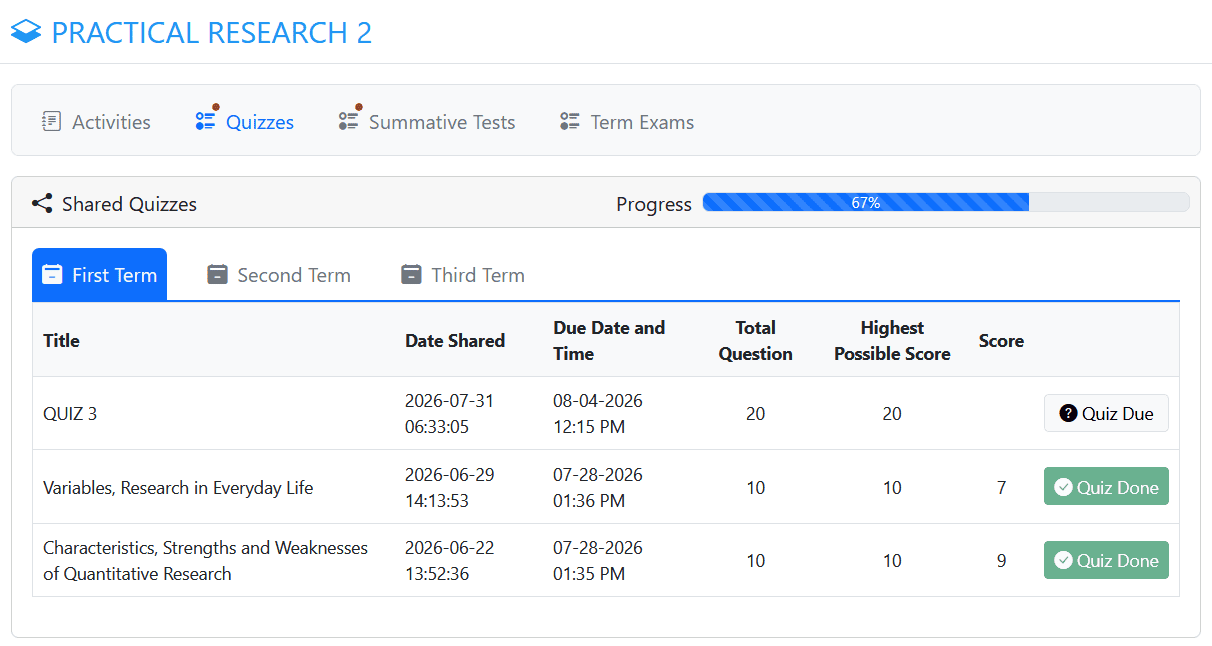
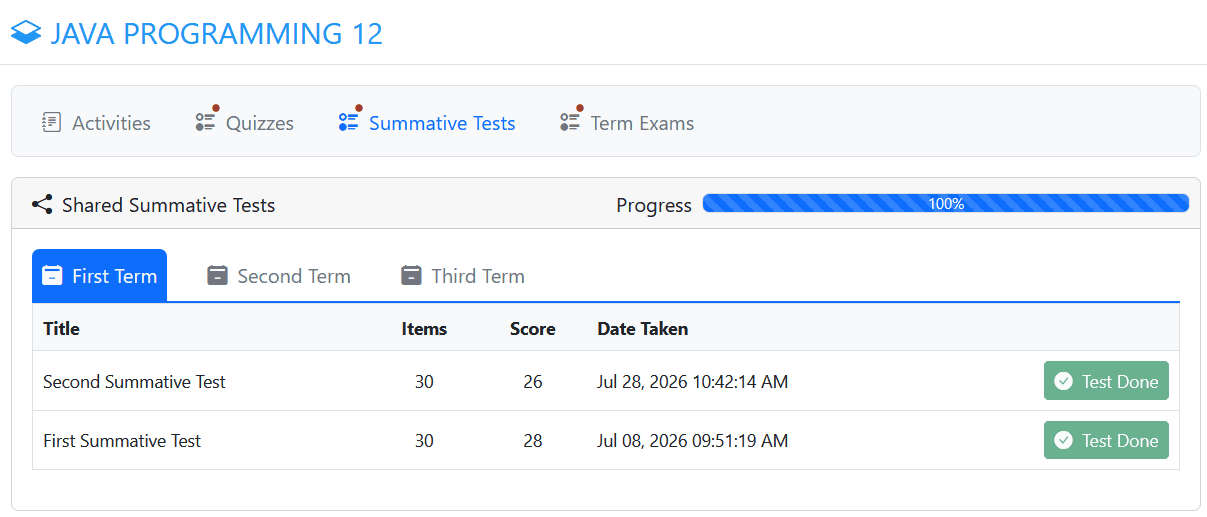
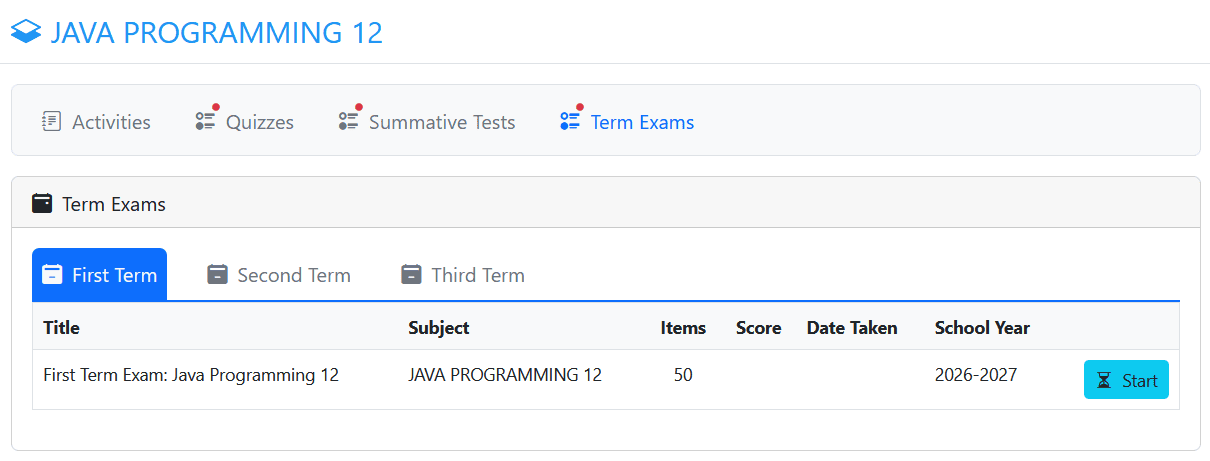
Aligned with DepEd's vision of developing lifelong learners, eAssessment transforms the assessment process into a faster, fairer, and more accessible experience. It enables informed decision-making, supports learner progress, and strengthens educational outcomes through innovation and technology.
Moreover, eAssessment fosters a culture of continuous improvement by providing timely and accurate feedback to both learners and educators. Through data-driven insights, teachers can identify learning gaps, tailor instructional strategies, and monitor student performance more effectively. This enhanced approach not only promotes accountability and efficiency in the educational process but also empowers learners to take an active role in their academic growth, preparing them to become adaptive, responsible, and future-ready citizens.
Sign in
Forgot password
Table of Specification
Automated TOS Generation enables users to quickly create a Table of Specification by automatically organizing learning objectives, topics, and assessment items. This feature reduces manual work, improves accuracy, and saves time for educators.
Printable TOS Output allows the generated TOS to be easily printed or saved, making it convenient for documentation, review, and classroom use.
Assessment
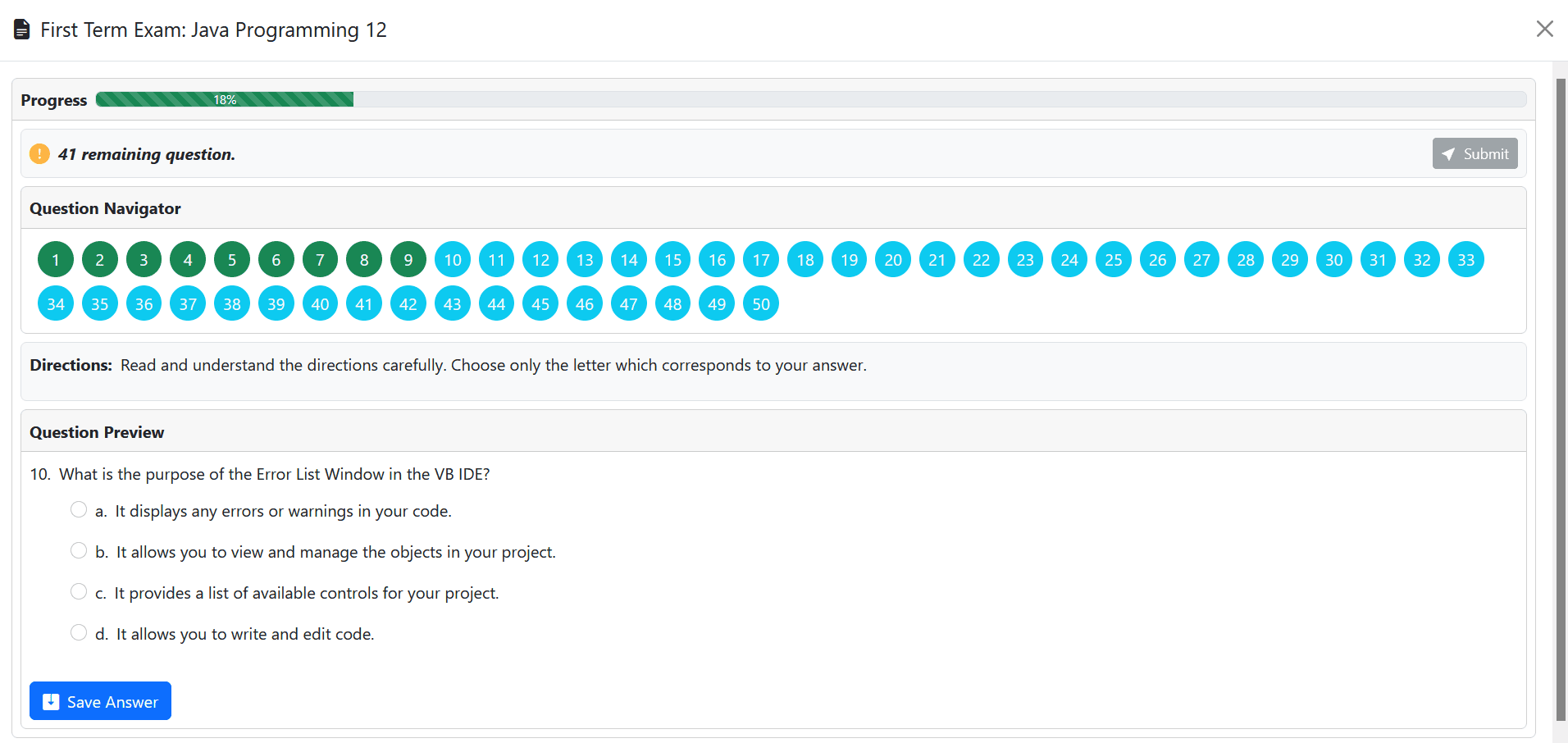
Assessment module enables educators to create, manage, and evaluate various assessment types, including activities, quizzes, summative tests, and term exams. It supports efficient test administration, accurate scoring, and performance tracking. By centralizing assessment processes, the system helps monitor student progress, identify learning gaps, and provide data-driven feedback to improve academic outcomes.
Item Analysis
Item Analysis provides valuable insights into student performance by evaluating assessment results through key statistical measures. It identifies the mastery level achieved by learners, highlights the least mastered competencies that require intervention, calculates the mean score and mean percentage score (MPS) to determine overall achievement, and measures score variability using standard deviation. These indicators help educators make informed decisions and improve instructional effectiveness.
Learning Outcomes
Learning Outcomes provides valuable insights into learner achievement by assessing the extent to which students meet the intended competencies and educational objectives. It identifies attained and unmet learning outcomes, highlights areas that require additional support and intervention, and measures overall performance through achievement indicators. These results enable educators to evaluate instructional effectiveness, monitor student progress, and make data-driven decisions that promote continuous learning improvement and academic success.